Promising evidence · Promising, small studies
A review of WATSU research found benefits for pain, mobility and mood, while noting that most studies so far are small.
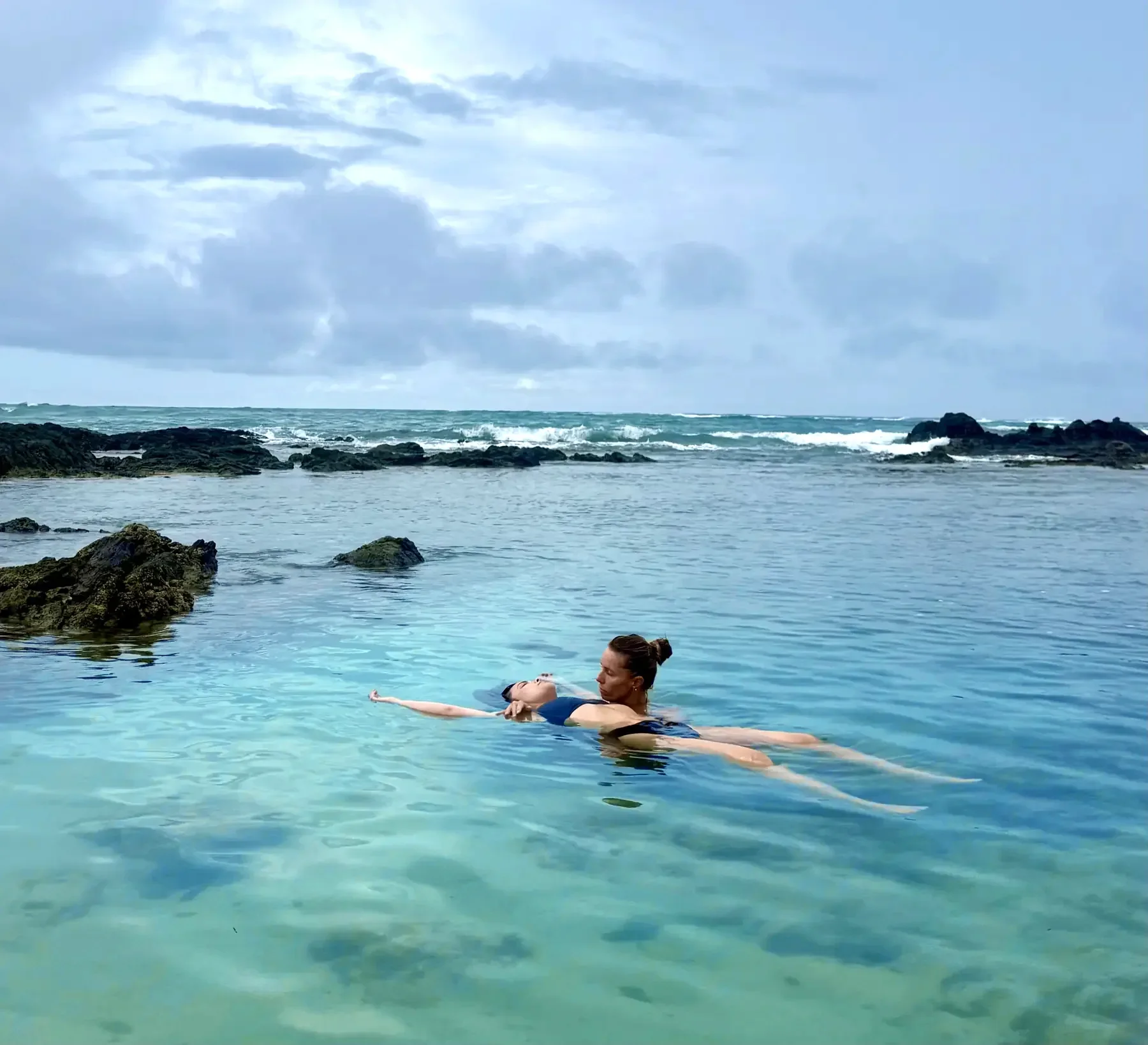
Floating & holding
Reconnecting with your primordial self: a sense of home, emotional release and unconditional holding.
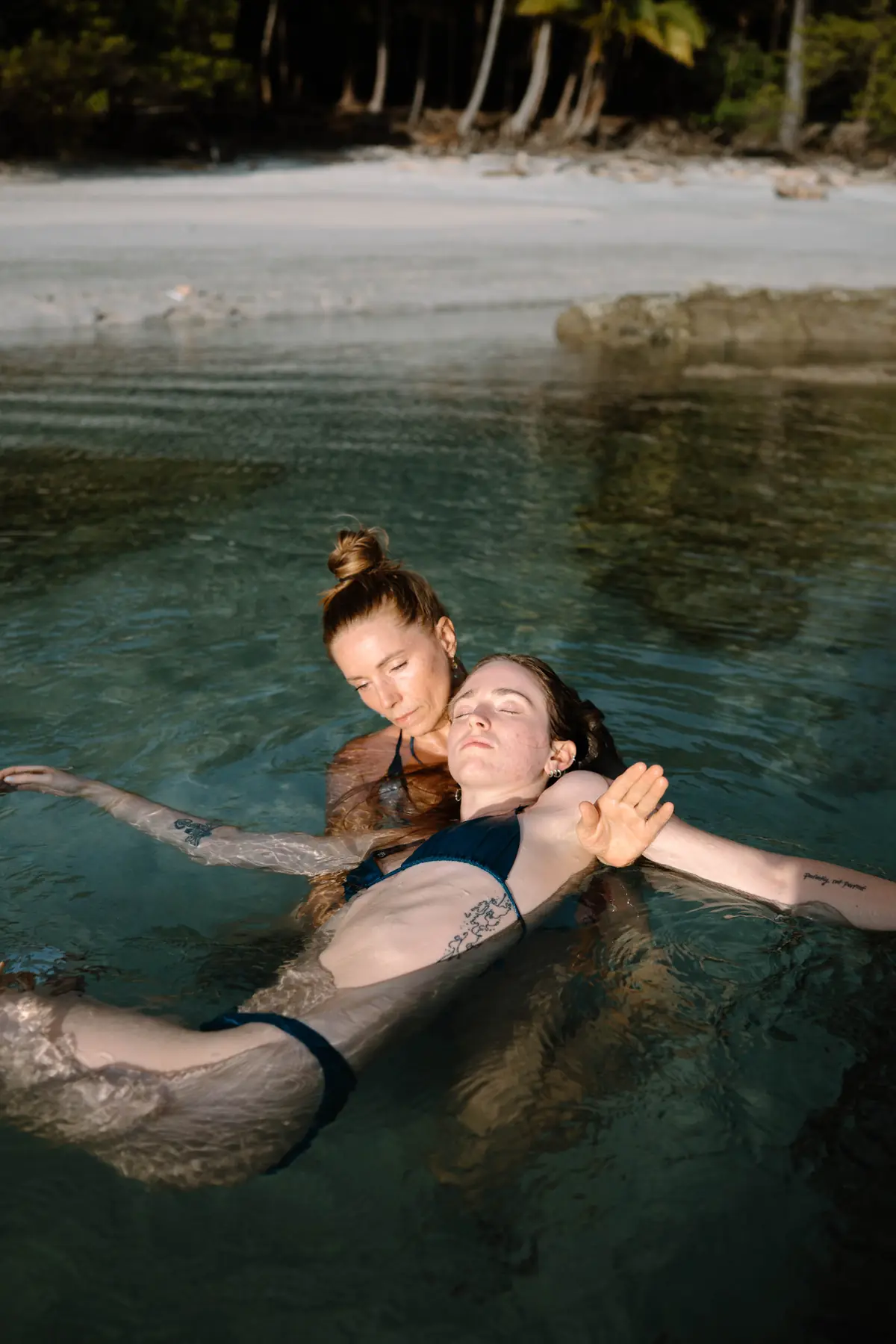
Before you had a name you were floating, held, rocked, warm. The memory still remains.
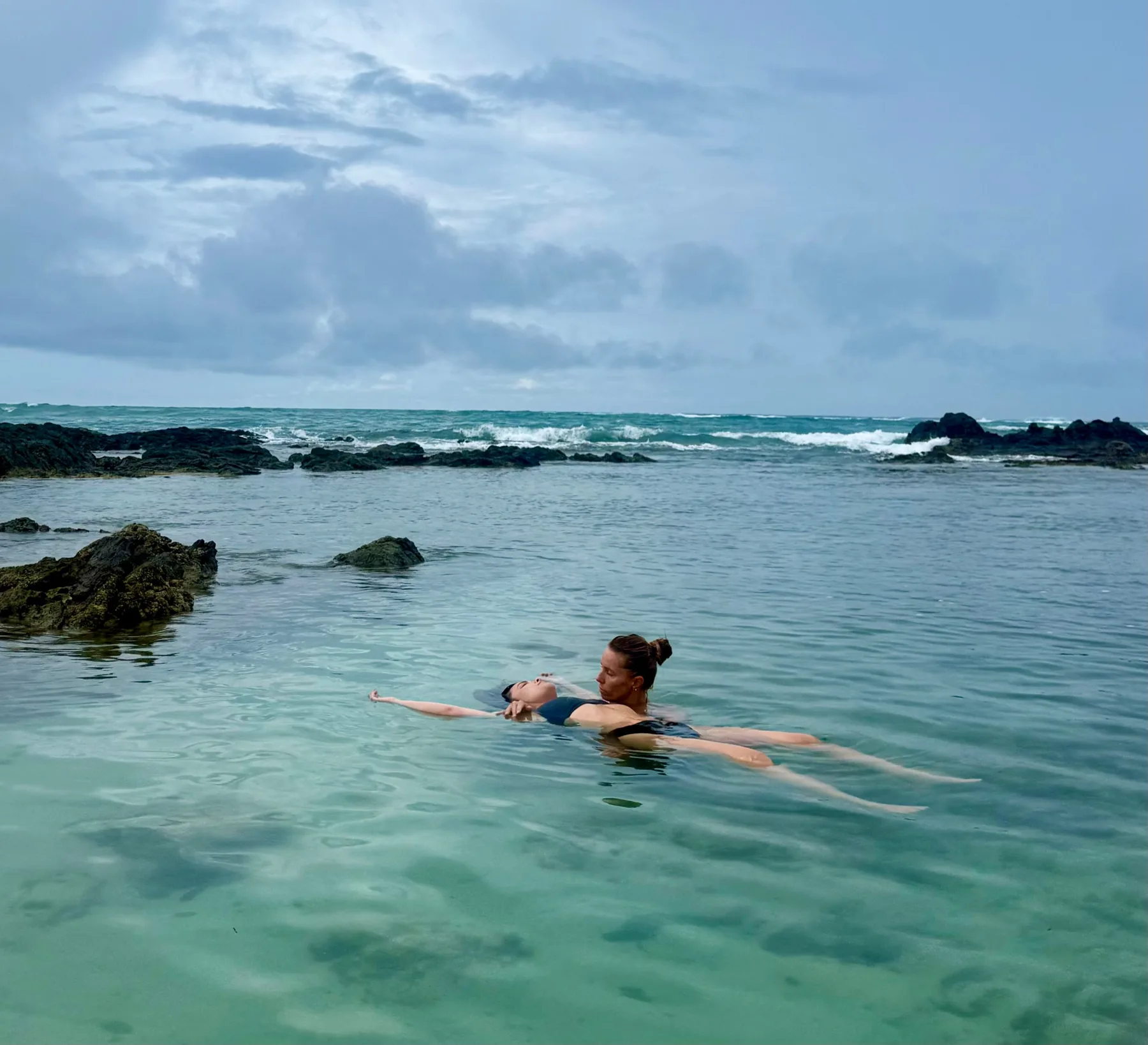
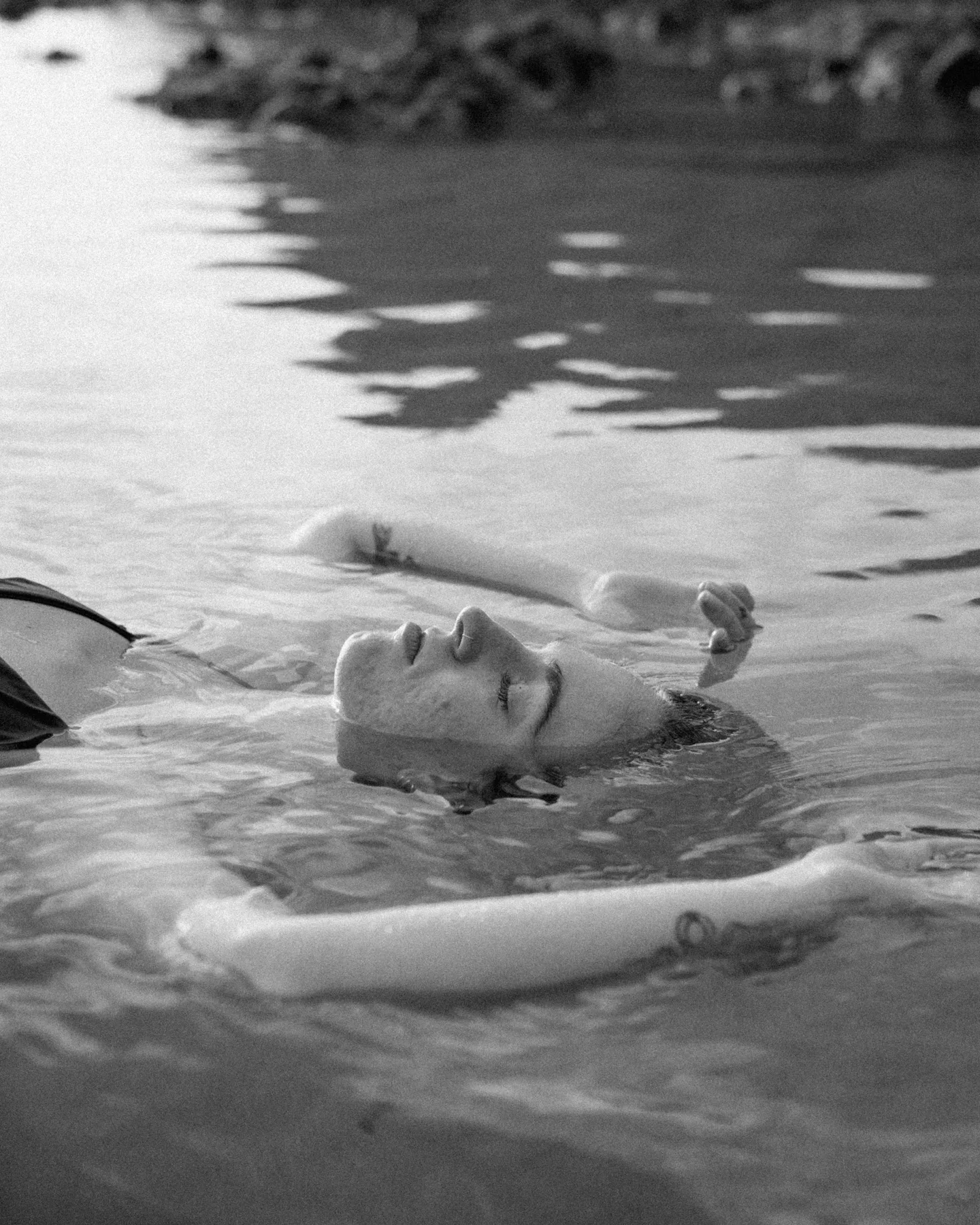
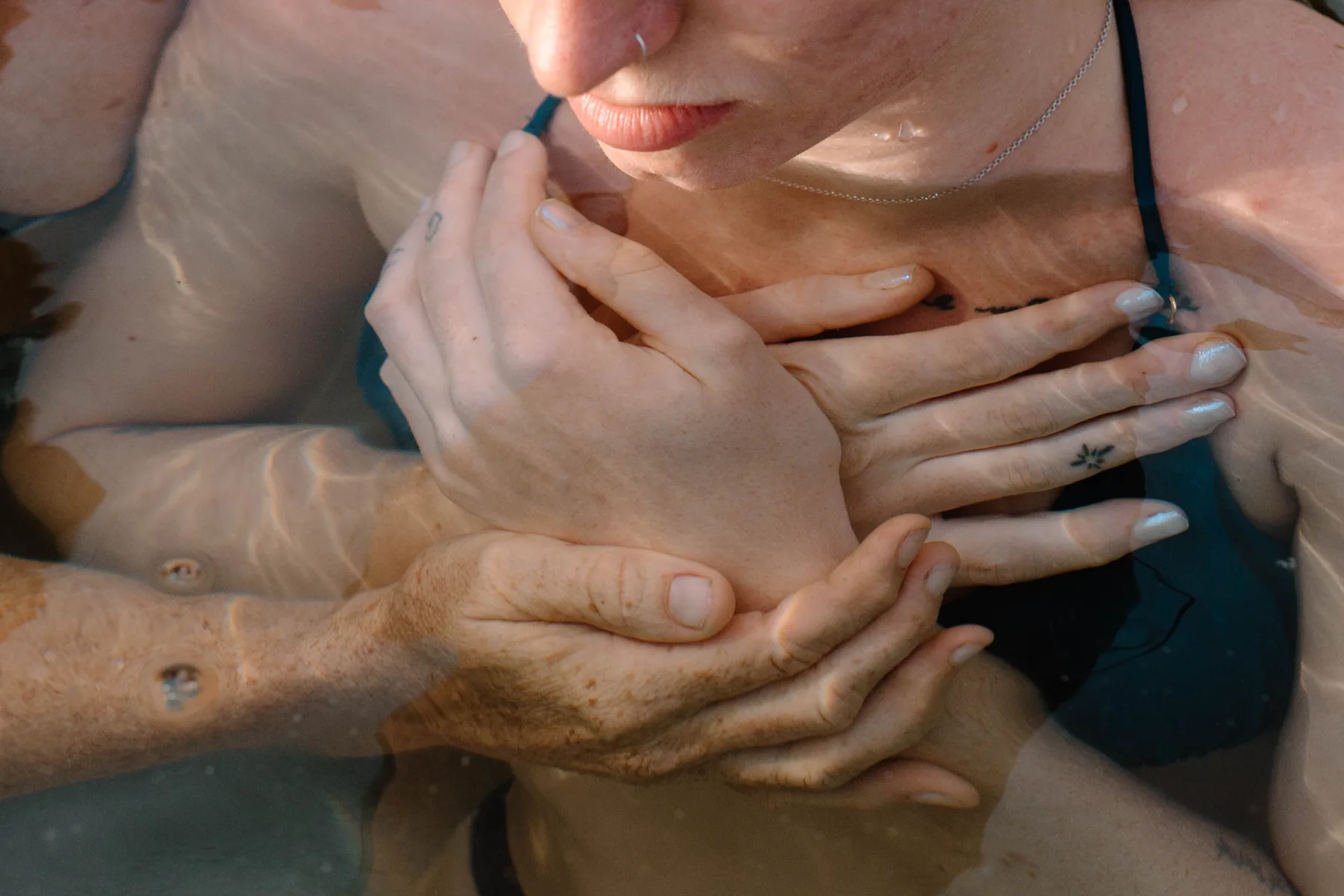
In WATSU you are fully held in a body of water warm enough to let you relax completely. A series of gentle motions encourages both body and mind to release and open up. During the session I focus on the areas of the body that hold tension or emotion.
I trained in this form of aquatic bodywork in Costa Rica, and I'm a WATSU practitioner certified by WABA, the Worldwide Aquatic Bodywork Association.
It is not unusual to experience a profound physical and emotional release, or a deep sense of love and care.
Around one to two hours, one to one. Every session is shaped around you.
We begin with a detailed conversation about what is current for you, your goals and your intentions for the session. I explain what to expect and how the session will unfold.
We gently release into the water together and sync our breath.
We travel beyond gravity in a gentle, soothing flow, relaxing joints and tight muscles and mobilising the spine.
We take our time transitioning back to the vertical world, leaving space for sharing and an easeful return.
These practices are ancient. The science around them is recent and uneven. Here is what it shows so far, and how much weight each finding can carry.
Promising evidence · Promising, small studies
A review of WATSU research found benefits for pain, mobility and mood, while noting that most studies so far are small.
Good evidence · Randomised controlled trial
In a randomised controlled study, WATSU sessions improved pain, mood and body awareness compared with a control group.
Schitter et al., 2024, Complementary Therapies in Clinical Practice
Promising evidence · Promising, no control group
One hour of floating with reduced sensory input sharply lowered anxiety and improved mood in people living with anxiety.
Good evidence · Large survey, shows association not cause
Across 18 countries, people who spent time near water, inland or at the coast, reported better mental wellbeing.
Evidence ratings are a plain-language summary of each study's design and size, from early (animal or very small studies) to strong (large reviews of many studies). Follow the links to read the papers yourself.
A practice to try at home
A small taste of the water work you can do today, wherever you are.
Audio guide coming soon. I'm recording this practice in my own voice, outdoors, so you can be guided through it.
Book Water
As a single private session, paired with another element, or woven into a private immersion over one to three days.